
Moving Fast but Getting it Right.
Recently, our team was asked to replace 2 characters in an existing product line for Sam’s Club. And with most things retail, the timeline was… aggressive. The kind where you look at the calendar, look back at the work, and just start moving.
Normally, parts of this process would be handled by freelance support. Initial character turns, exploratory sketches, refinement passes. But with the compressed timeline, there wasn’t room for handoffs.
So we kept it in-house. And we moved.
Starting with the Drawings
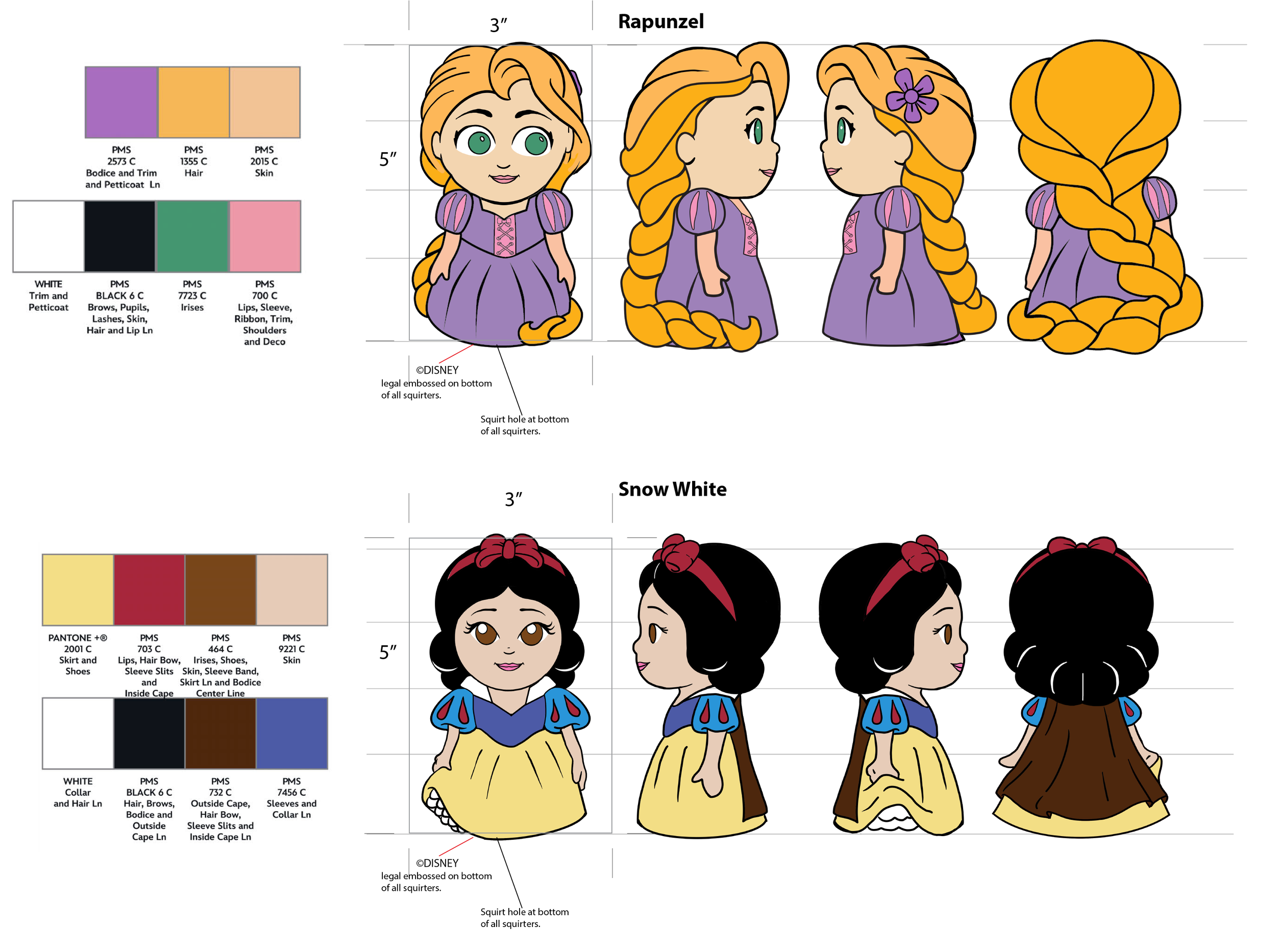
We kicked things off with quick but intentional sketch work for both characters.
The goal wasn’t just to “draw Rapunzel” or “draw Snow White.”
It was to design them as products.
That meant:
Thinking about how hair translates into a sculpt
Simplifying forms for rotocast production
Keeping proportions appealing but durable
Making sure likeness still passed licensor standards
These early drawings had to do a lot of heavy lifting. I drew the initial black & white turns, reviewed them with my team and jumped right to color using the PMS swatches from the style guides.
Working Through Disney Notes
When you’re working with a partner like Disney, notes aren’t just tweaks, they’re guardrails. Every adjustment is about protecting the character while making it work in a completely different medium.
Instead of slowing us down, the notes actually helped sharpen the direction:
Push likeness in key facial features
Adjust proportions to better match character style
Refine details that would translate cleanly into paint and sculpt
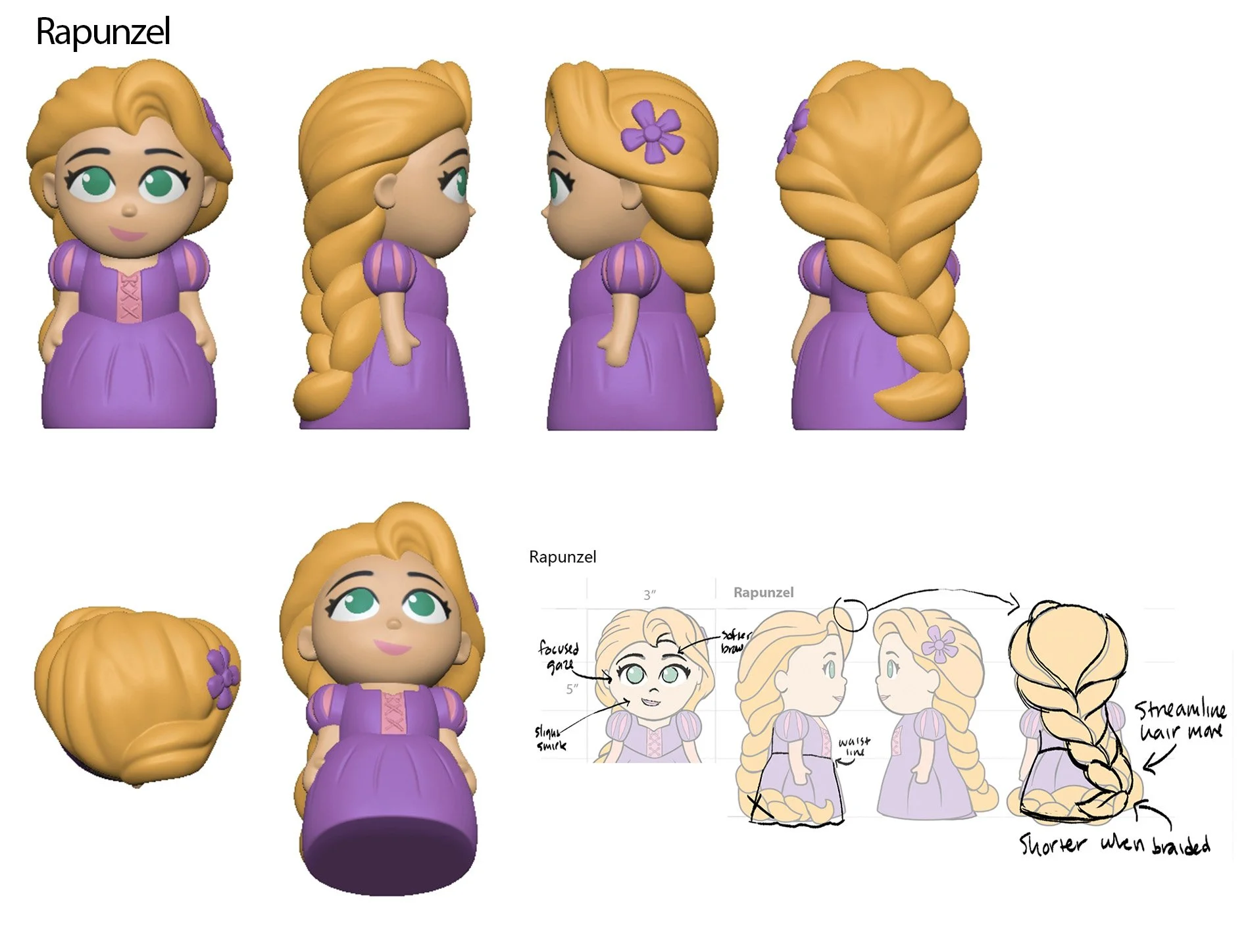
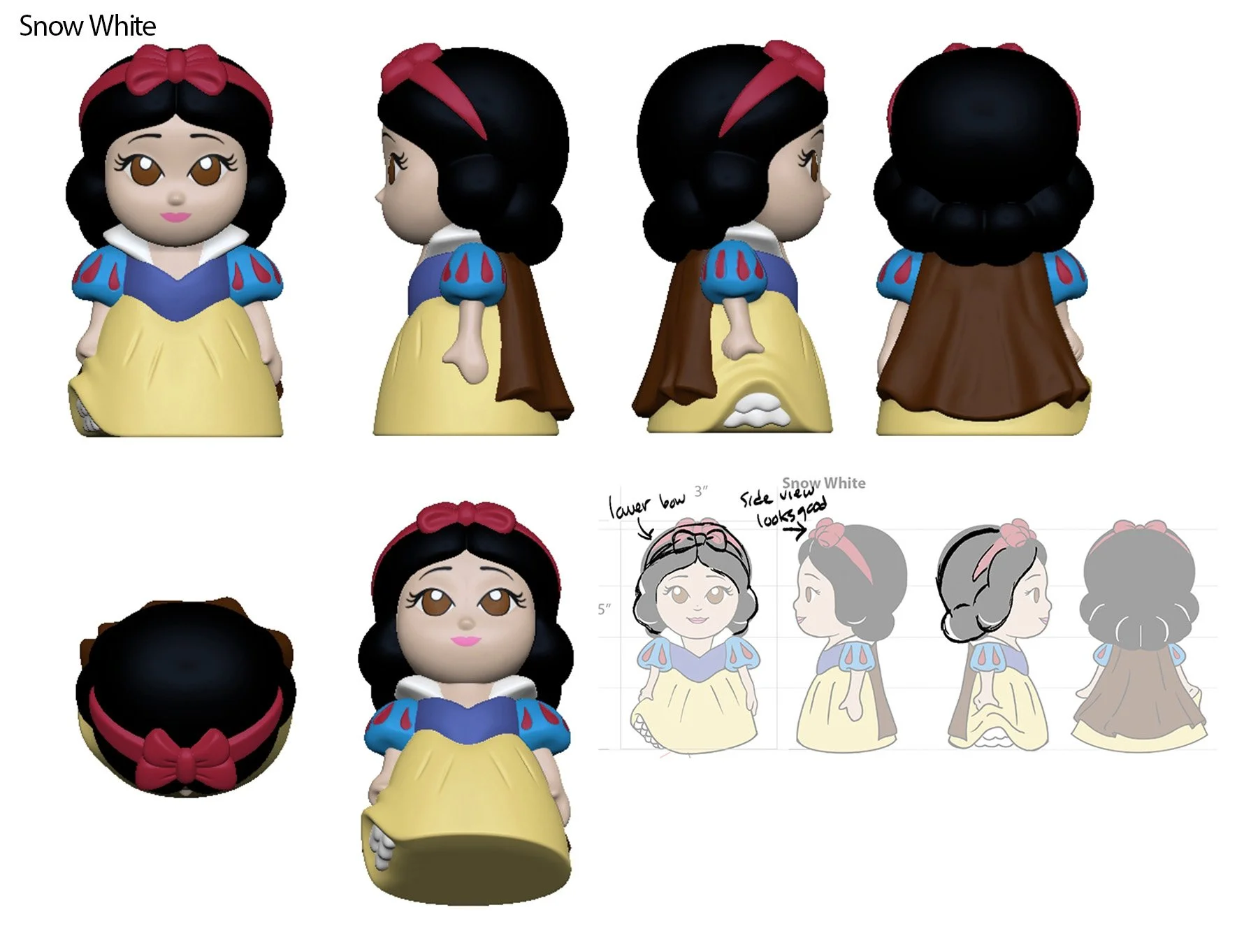
Because we were already hands-on, we could turn revisions quickly, no lag, no back-and-forth through layers of communication. We turned around the revisions, got a fast approval and moved to 3D sculpt. Even then, tweaks are made to the designs.
From Sketch to Reality
The best part of any project like this is when it becomes real.
Seeing the pre-production samples come in, fully painted, physically in hand is always a moment.
You’re looking at something that started as a loose sketch, but now sitting on a table as a finished product.
And in this case, it happened fast. Under 100 days to be exact.
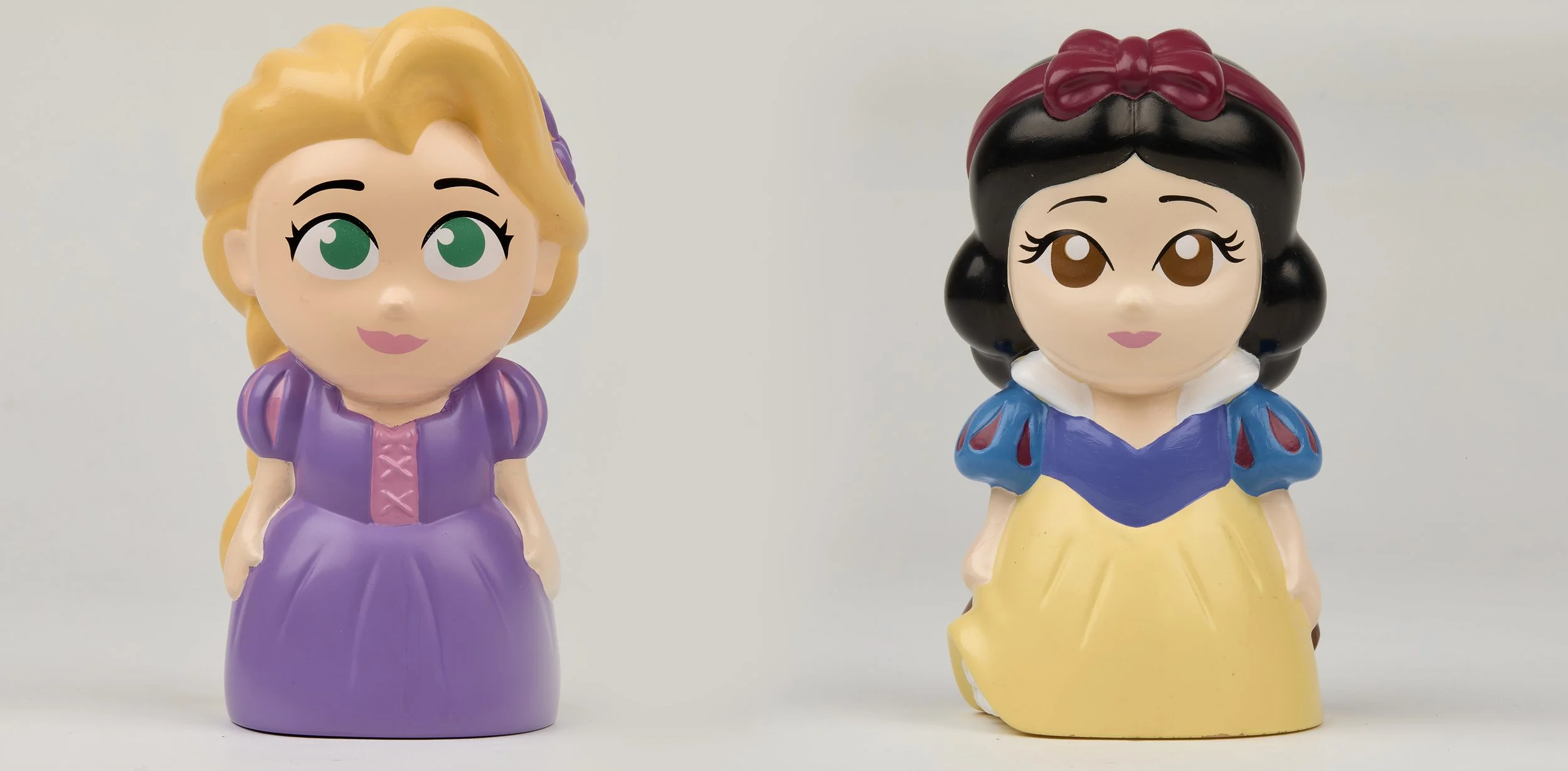
First shot pre-production samples
What This One Really Shows
This project wasn’t just about two bath toys. It was about what a strong in-house creative team can do when the timeline gets tight. Things I try to improve with each project:
Lead the team through high-pressure timelines
Maintain brand consistency across complex projects
Collaborate effectively with cross-functional partners
Deliver high-quality work without delays
This is the part of creative work people don’t always see.
Not just the final product—but the ability to adapt, absorb more responsibility, and still deliver.
The Takeaway
Planning is important. Execution is everything.
The ability to adapt, take ownership, and deliver consistent results is what drives successful creative teams.
We will see these two princess in Sam’s Club this fall and in the next Creative Sunday I’ll share more from The Summer We Started a Robot War because that pitch deck is very close to hitting inboxes!