
W72A: the Heart Inside the Machine
Every story needs a catalyst and in The Summer We Started a Robot War, that spark isn’t just an idea, it’s a machine. His name is W72A, but the kids call him W or “Dubya”.
Personality
Dubya is a fish out of water in the purest sense. He wakes up in a world that has moved on without him, surrounded by kids who treat ancient history like rumor and myth. That disconnect is where a lot of the story’s curiosity lives.
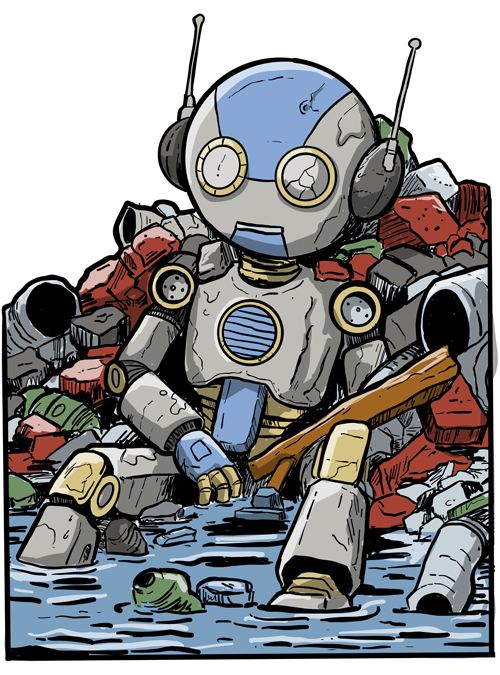
W72A is found in a sewer, lost for decades.
He doesn’t just observe, he asks. Constantly.
“Query: Why is this location designated ‘hangout’?”
“Validating status… Are we in danger?”
His language is precise, mechanical, and just a little bit off. It creates moments that are funny on the surface, but underneath, it lets the reader learn alongside him. If something feels strange to Dubya, it probably should feel strange to us too.
The nickname “Dubya” is important. It’s the first step in humanizing him. The kids don’t see a weapon or a relic, they see a friend who just happens to run diagnostics mid-conversation.
Design
Dubya is built from the DNA of the characters I grew up with.
You can see pieces of Mega Man in his proportions and upgrade potential, the quirky intelligence of Fugitoid in his presence, and the isolation and mystery of Metroid in his origin.
There’s also a harder edge baked in, inspired by SuperPatriot, a character who is literally rebuilt through technology. That idea, that a machine can be both tool and identity, is central to Dubya.
His upgrades pull from that same nostalgia. Think modular power-ups like Mega Man, combined with the playful discovery and progression of Super Mario Bros.. New abilities aren’t just cool moments, they’re milestones in his journey.
Each upgrade says something about where he’s been, what he’s survived, and what he’s becoming.
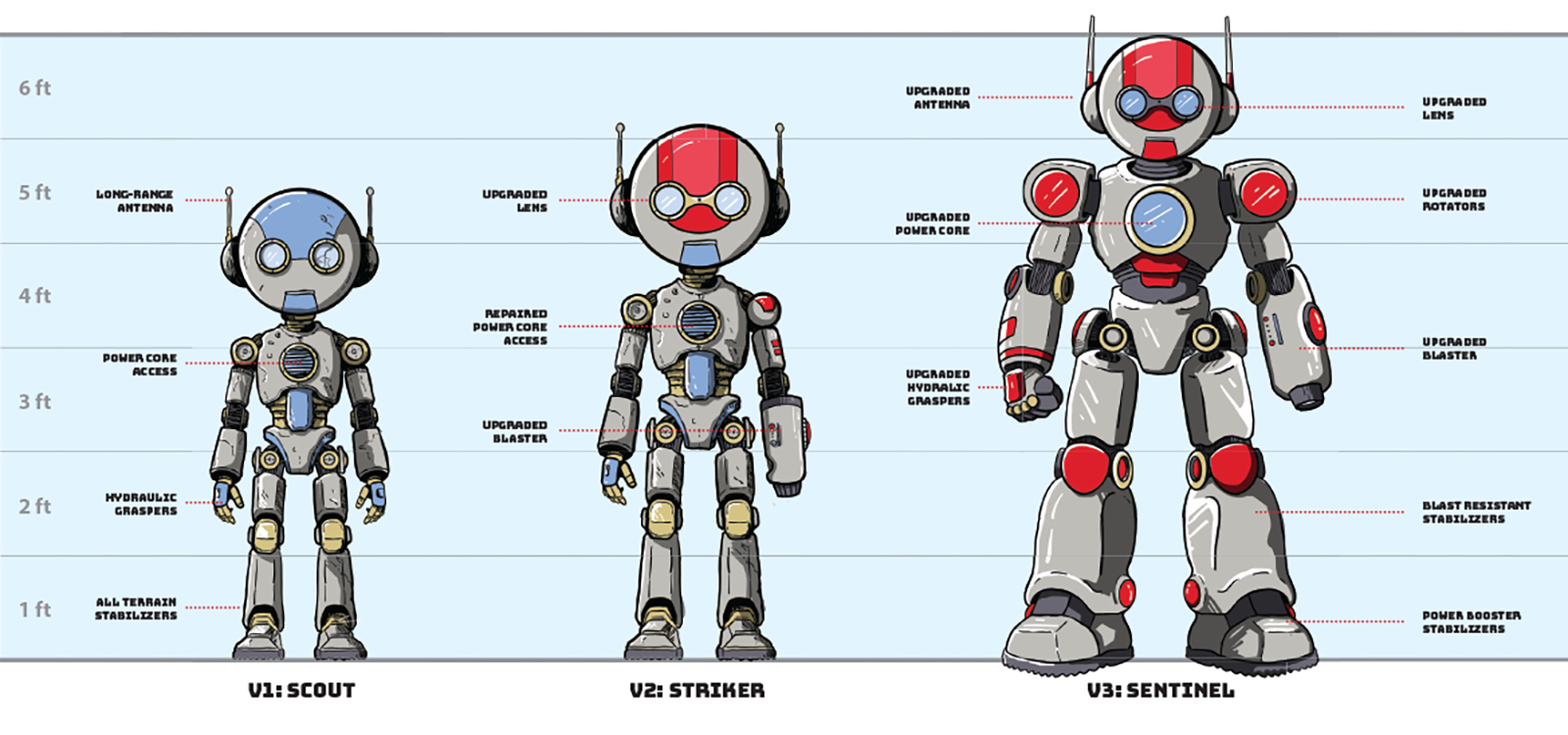
W72A starts as a simple robot but is upgraded at various points of the story.
Purpose
At the core of the story, Dubya is the MacGuffin. Once found and revived, his existence sets the story in motion.
The technology powering him shouldn’t exist anymore. It’s a relic from a war that reshaped the world and then disappeared into myth. That makes him valuable, dangerous, and hunted.
Everyone wants something from him.
Some see him as a weapon.
Some see him as power.
Some see him as a key to bringing the past back.
The kids are the only ones who see him differently. They see Dubya.
That tension drives everything. The journey isn’t just about getting him somewhere safe, it’s about understanding what he is before someone else decides for him.
Evolution
What makes Dubya interesting isn’t just what he is, it’s what he’s becoming.
The energy source inside him isn’t stable. It’s changing him.
At first, he’s comic relief. A literal machine trying to interpret human behavior, often getting it wrong in ways that feel light and funny. But slowly, that changes.
He starts making decisions.
He starts protecting.
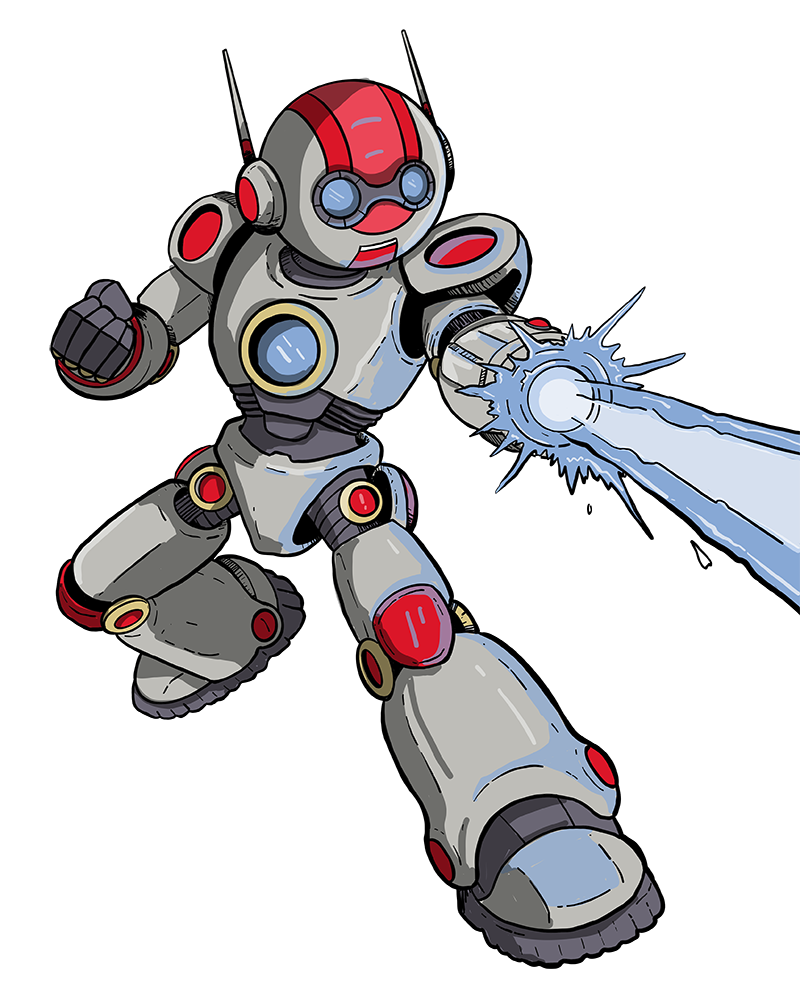
W72A becomes the gang’s protector against their pursuers.
He starts questioning.
Not just the world around him, but himself.
Why was I built?
What is my function now?
What happens if I choose differently?
Dubya’s journey moves from programmed responses to something much deeper. He begins to wrestle with purpose, identity, and existence in a way that mirrors the kids growing up around him.
By the time the story unfolds, he’s no longer just the machine that started a war.
He might be the one who decides how the next one ends.