
The Summer We Started a Robot War
Chapter One: The Discovery
The last bell of the school year didn’t just ring, it shook the building. One second we were sitting there pretending to care about fractions or whatever Mrs. Knoblocke was talking about, and the next…
BOOM!
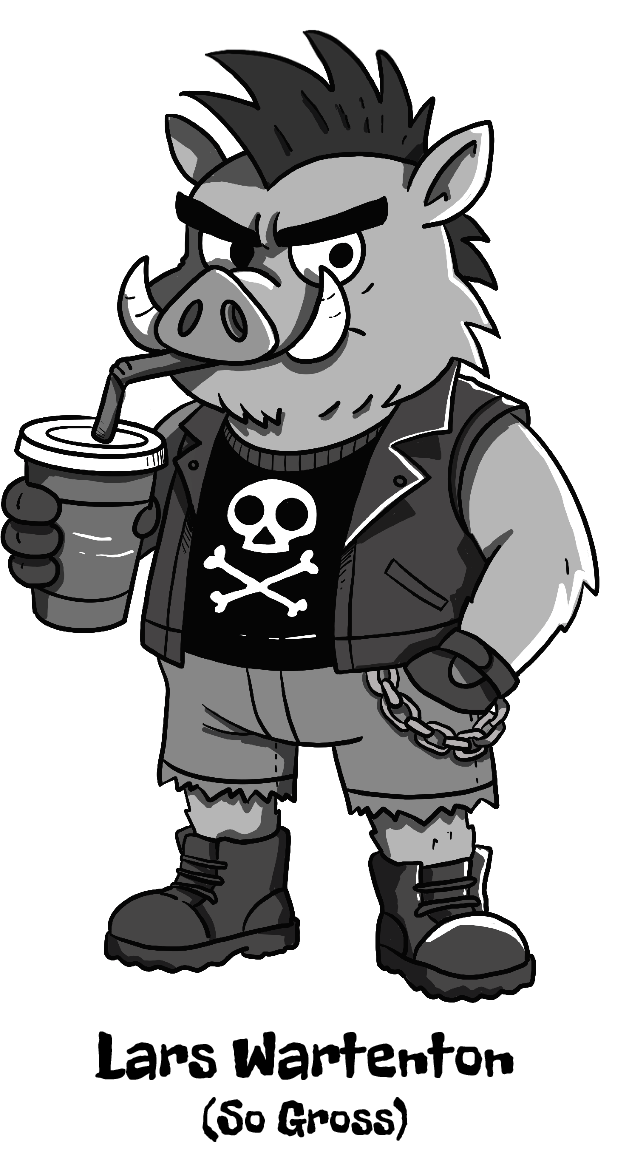
Lockers slammed. Chairs scraped. Someone yelled “SUMMER!” like they’d just been released from prison. Papers flew everywhere. I’m pretty sure even the stentch of Lars Wartenton
ran out the door.
I was already halfway out of my seat before the echo even faded.
“Race you to the rack!” I shouted, grabbing my bag off the floor.
“You’re gonna lose!” Sully fired back, knocking into his desk on the way out.
“You’re both natural losers,” Ollie said, still packing his stuff like we weren’t escaping.
Then he was already in the hallway. One giant leap of course.
The whole school poured out like a busted pipe. Kids everywhere. Loud. Laughing. Someone had music blasting from a radio, and it echoed off the walls like the place couldn’t hold it all in anymore. Even the teachers looked like they were done pretending to be in charge.
At last the doors opened and it hit.
Warm air. Real air. Not that recycled, smells-like-mystery-meat-lunchroom air we’d been breathing all year. This was different. Like summer had been waiting right outside, leaning up against the building, just biding its time.
I didn’t even slow down. I hit the bike rack, grabbed my handlebars, and swung a leg over.
“Last one to Cottman Ave is a rust bucket!” I called.
“That doesn’t even make sense!” Sully said, already climbing onto his bike.
“It makes enough sense!” I grinned.
Ollie adjusted his glasses. “Technically none of us are…”
“Go!” I pushed off before he could finish.
We tore down the sidewalk like we had somewhere important to go. But we didn’t and that was the whole point. The only thing important was we got as far away from Buckleburg Elementary as possible.
My backpack bounced against my side, half-zipped, probably losing stuff as I went. Didn’t matter. Nothing in there was important anymore because school was done. The town flew by in pieces, brick storefronts, middle-class homes, open windows with fans humming inside. Mrs. Kline was out front watering her flowers. She waved like she always did.
I waved back without slowing down.
This was Buckleburg.
Not big. Not exciting. Definitely not famous. But it was ours.
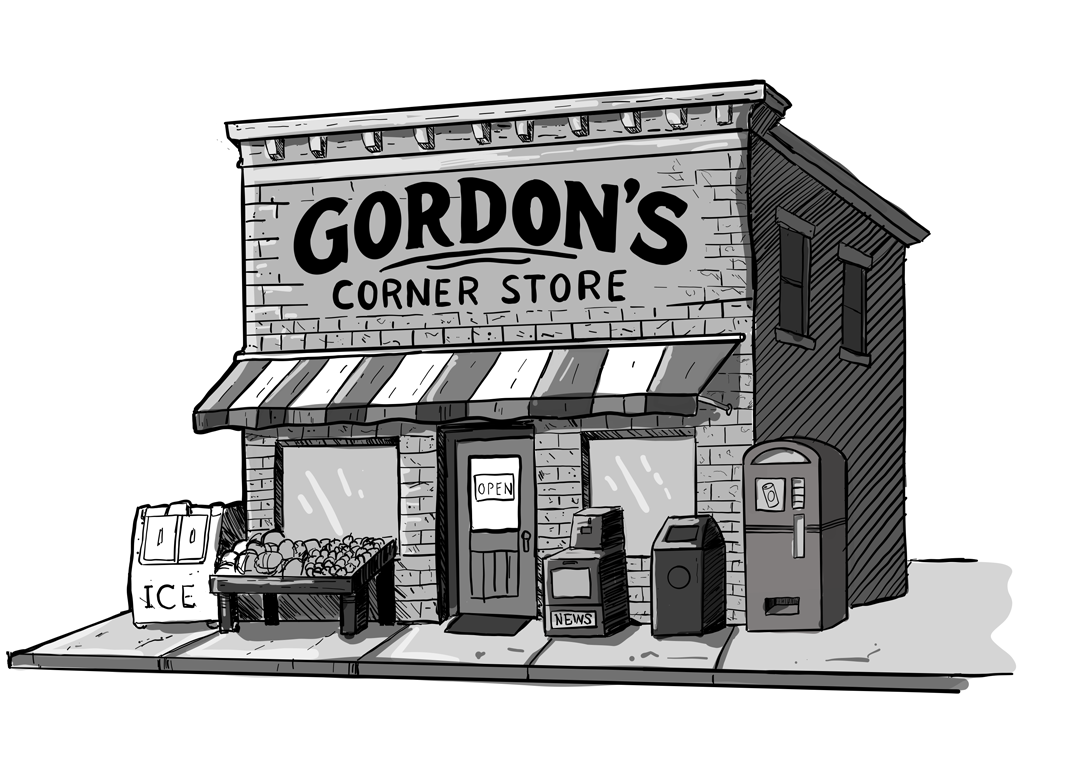
We flew past Gordon’s corner store with the hand painted sign. Past the library with the flag that never quite hung straight. Past rows of houses that all looked just a little different depending on who lived there.
And then, there it was. The factory. You could see it from almost anywhere in town if you knew where to look. Just sitting there at the edge like it didn’t belong anymore. Big. Quiet. Old. None of us knew why it just sat there abandoned. Ollie said his dad told him some old corporation owned it and wouldn’t sell it to anyone. You’d see the ocassional work van there for a hot minute and teenagers supposedly wandered the halls during the night, but we just played stickball in the parking lot.
“First practice starts tomorrow,” I said. “Meet here in the morning.”
I woke up early. No alarm, just ready to soak up every hour of summer.
The sun was already warming the street by the time I rolled my bike out. Buckleburg was quieter than usual. Everyone must have slept in today. I didn’t wait long.
I pedaled straight to the edge of town.
The factory looked bigger that morning.
The fence surrounding it was bent in places where generations of kids had climbed it. Weeds pushed through cracks in the pavement. The building itself just sat there. Tall with empty windows staring out like it remembered something we didn’t.
I got there first of course.
Sully showed up next, coasting in and hopping off his bike.
“I still don’t like this place,” he said, glancing toward the building.
“You say that every time,” I told him.
“Yeah,” he said. “And I mean it every time.”
Ollie rolled in a minute later, a little out of breath.
“I brought chalk,” he said, holding up a small box like it was important.
“For what?” Sully asked.
“For bases,” Ollie said. “Obviously.”
“Obviously.” I repeated.
We’d played at this spot a hundred times. Probably more. Singles, doubles, triples, home runs, this was the place. No cars cutting through, no little brothers or sisters tagging along, no parents suddenly remembering a “quick chore” you had to do right now. Just us, the game, and no interruptions.
And that day we played for about 2 hours before disaster stuck.
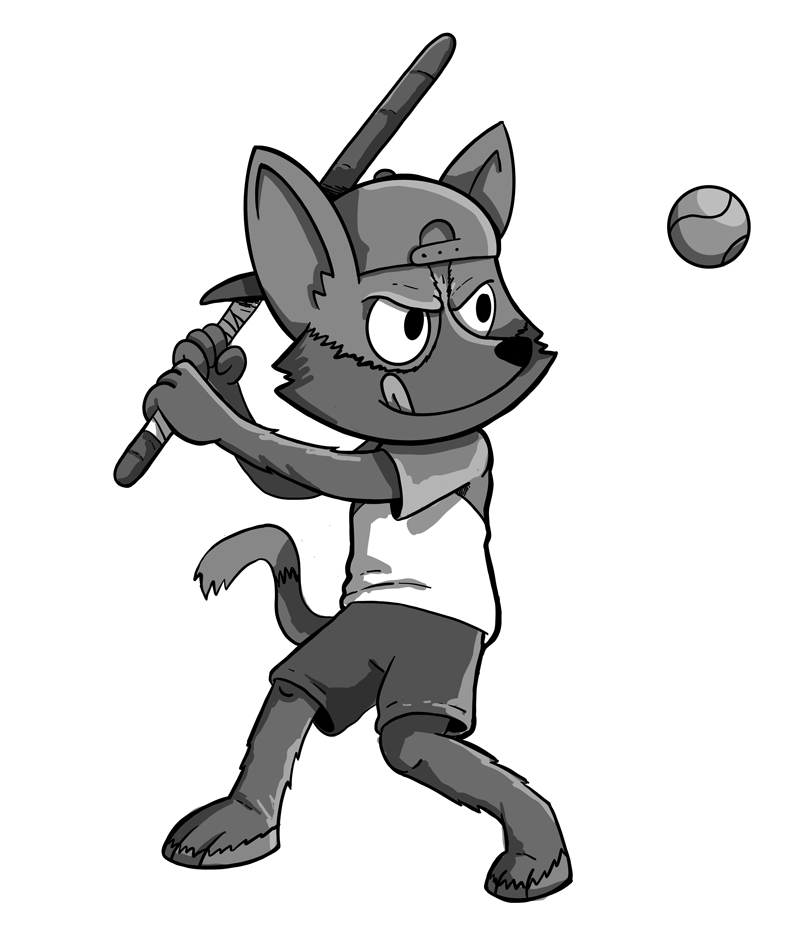
“Dinger!” I shouted, smoking the tennis ball with the kind of grace only seen in slow-motion replays.
It soared.
It bounced.
It disappeared straight into the sewer drain.
We all froze.
Ollie looked at me. “Are you kidding? You manage to lose the ball on the first day of the summer?”
This storm drain sat in front of the old warehouse or manufacturing plant. Many windows had been smashed by various stickball games over the years. But I can’t remember hearing anyone lose a ball like this before.
“We can fish it out.” I said confidently. I was 60% sure of that. Maybe 40%.
The three of us crouched over the storm drain and peered into the darkness. It smelled like damp metal and bad decisions.
“It rolled pretty far.” Sully said, frowning.
“We gotta go in after it,” I said. “No ball left behind.”
Which is how we ended up crawling into the sewers on the very first day of summer.
Now, I know what you are thinking. Gross. Smelly. Rat City. And yep, it really was all of those things. But it was also kinda awesome. There were echoes, weird dripping pipes and I swear there was a glowing mushroom that Sully definitely told us not to touch (Ollie touched it anyway). About 20 yards in, past a huge hole in a brick wall that had crumbled into sludge, we saw something way cooler than a tennisball.
Something big.
It was jammed under bricks and wood, tangled in roots and rusted cables. A humanoid shape. Metal. Beat up to all heck but still too sophisticated to be junk.
“Whoa,” Ollie breathed. “It looks like….a robot.”
Sully took a step back. “That IS a robot.”
I blinked. “What kind of robot hangs out in a sewer?”
“A broken one,” Sully whispered.
Of course I stepped closer.
The faceplate was smooth and round, like a helmet. Two glass eyes were black like a turned off TV screen. One of them had a hairline crack inside. It did not have ears but it did have large half circles, like headphones. Each had an antenna on them. It had solid arms and legs that were joined by flexible rubber like springs and ball sockets. The chest had a large vented circle in the center. It was pretty beat up actually. It looked like it took a grenade to the chest.
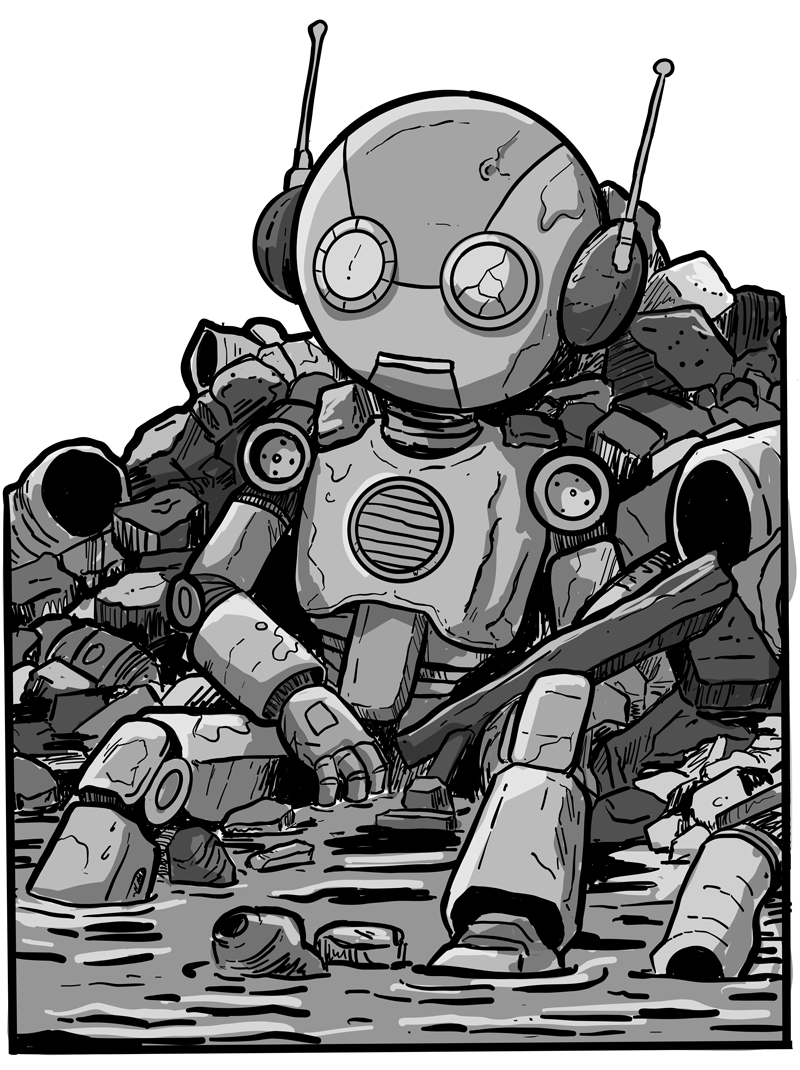
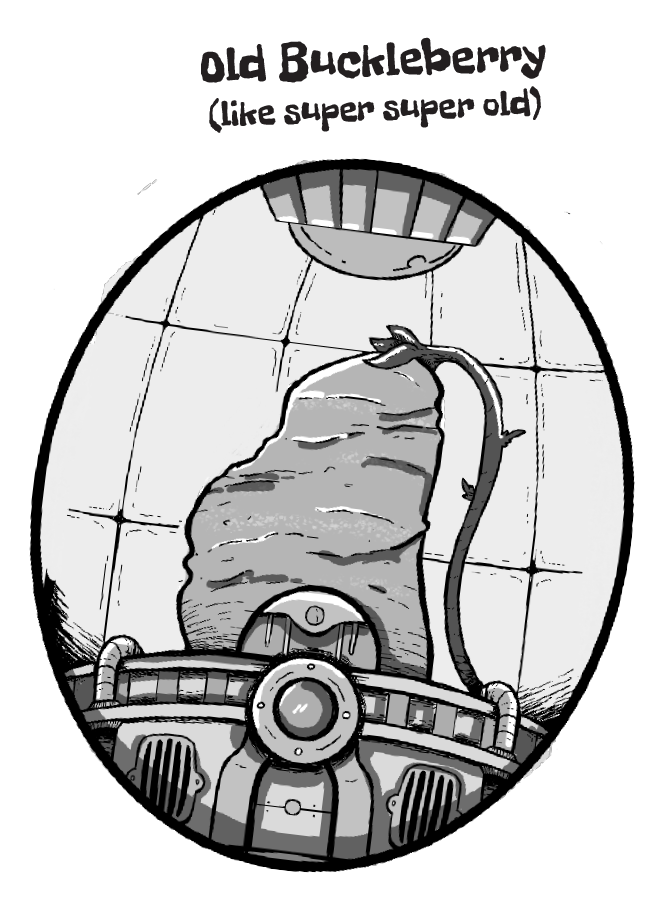
I poked the robot with my stickball bat and a panel inside the chest hissed open. Inside was a single, glowing, strawberry-sized fruit surrounded by faintly pulsing wires and vines.
“That looks like a shriveled up buckleberry. They are ultra rare! Nearly extinct I think.” Ollie said, eyes huge behind his goggles.
“Is that thing powering this robot?”
“If it is, it looks to be almost out of juice. That berry is pretty petrified. We should leave it alone,” Sully muttered. “It could be dangerous. Or haunted. A dangerous haunted sewer bot.”
Ollie ignored him. He was already pulling out tools from his backpack. “It is pretty much intact. This stuff looks old but is far more advanced then anything I have seen or played with in my dad’s shop,” he marveled.
While he tinkered, Sully and I kept watch. Sewer watch. Which meant arguing over whether we were being stalked my mutant raccoons.
Then, a hum.
We froze.
The robot’s eyes flickered. Then glowed.
“It’s waking up,” Ollie whispered.
The eyes swiveled and locked onto me. I almost screamed. Almost. Then it spoke.
“Designation: W72A. Status: Operational. Low-Battery Mode. Query: Identify yourselves.”
“Uh….Ember.” I said. “This is Sully. That’s Ollie. We are just kids. From Buckleburg. Don’t laser us. Please!”
The robot tilted its head and said “Current location?”
“Some sewer under the Buckleburg.” Ollie said.
The robot’s voiced buzzed. “Checking. Time elapsed. Five thousand, six hundred and forty-two days.”
Ollie did the math. “That’s like….97 years.”
Then came the kicker.
“Query: Status of the war?”
“What war?!” I yelped.
Before it could answer, the light dimmed and the hum faded. W72A powered down.
Ollie tapped the panel. “That buckleberry is nearly drained. Not sure we will find any to replace it.”
I stared at the robot.
“We’ll find a way to fix him,” I said “I don’t care if we have to spend the whole summer trying.”
They didn’t argue. Probably because they knew I was right. Or maybe because we were ankle-deep in something that smelled like trouble. And I don’t mean just the sewer.
But the plan was clear:
Find a way to jumpstart this bot.
Figure out what happened 97 years ago.
Somewhere beneath a far away city, deeper than the sludge we stood in, an old monitor flickered. A light blinked.
A signal went out.
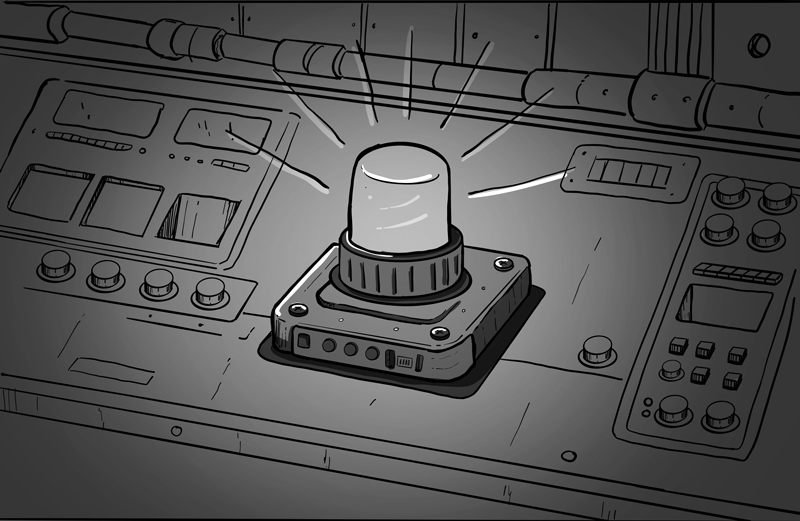
Trouble, my friend, had officially been rebooted.